
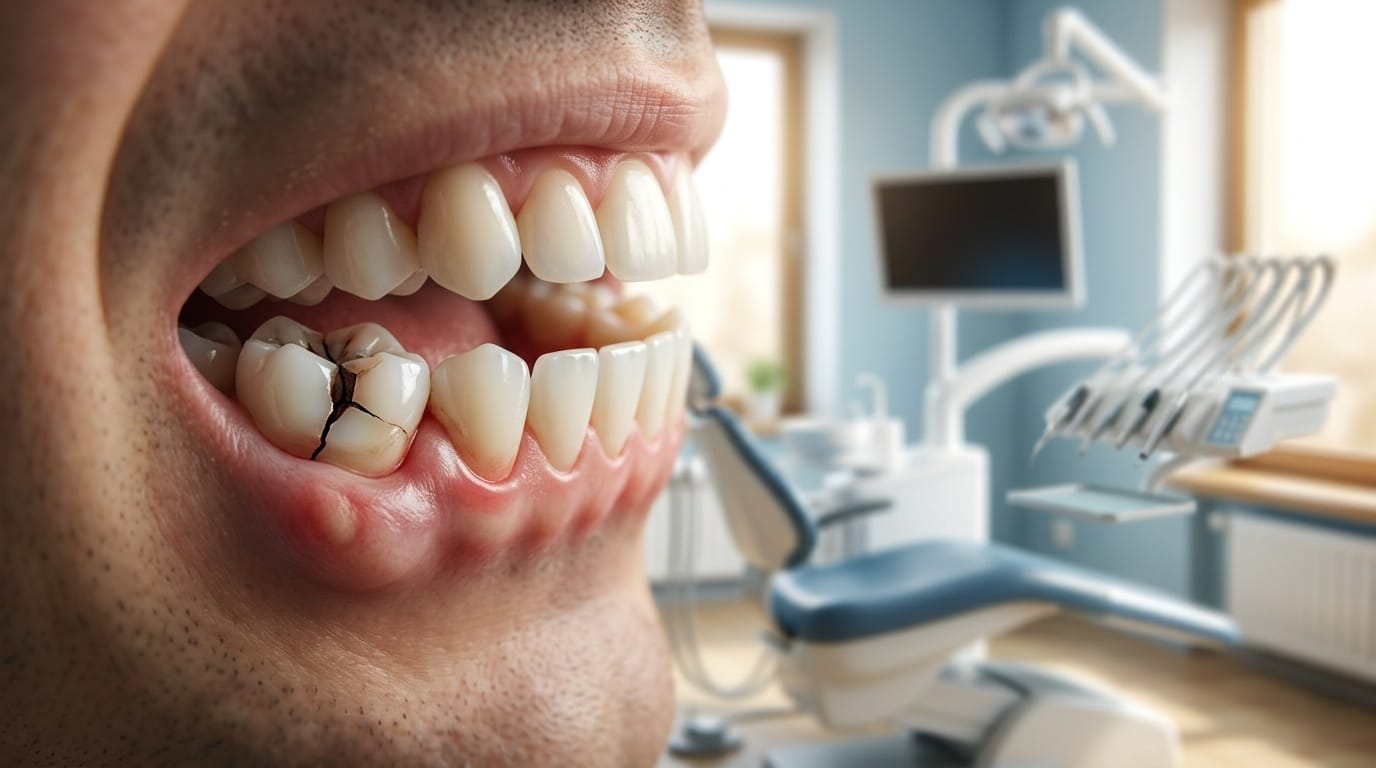
Dental treatments commonly focus on repairing and protecting your teeth; however, if a tooth is severely damaged or infected, saving it may not be possible. Because dentists typically view removal as a last step, every case will be evaluated to determine whether extraction is warranted.
For residents of Brookline and the surrounding area, learning to recognize warning signs can help prevent serious dental issues. In this blog, we will discuss some of the most common reasons why a dentist would consider an extraction and highlight the warning signs you should not ignore.
The Reason Why Dentists May Recommend Tooth Extraction
Whenever possible, dentists will try to restore a natural tooth rather than extract it, using a variety of restorative treatments, such as fillings, crowns, root canal therapy, or periodontal therapy. However, when conditions pose a greater risk to the patient if the tooth remains in place than if it is extracted, extraction is in the patient’s best interest and their overall health.
Common situations include:
- Severe tooth decay that reaches deep into the tooth
- Advanced gum disease affecting bone support
- Tooth fractures that cannot be repaired
- Infection spreading inside the tooth root
- Overcrowding before orthodontic treatment
According to the American Dental Association (ADA), untreated infections and advanced decay can spread to nearby tissues and structures; therefore, extraction of the problem tooth will prevent complications. Tooth extractions in Brookline, MA, are sometimes recommended by a dentist when damage is extensive to prevent further injury to surrounding tissue and promote healing. The space created by removing the problem tooth can be replaced with appropriate restorative options.
Warning Signs That May Indicate Extraction Is Needed
Many dental problems develop slowly. Patients may ignore symptoms until the condition becomes serious. Recognizing warning signs early helps prevent long-term damage.
Watch for these symptoms:
Persistent Tooth Pain
Persistent or extreme pain can be a sign of infection or deep decay. Pain that increases during chewing or heavy pressure can suggest internal damage within the tooth.
Swelling or Gum Infection
If you notice that gum swelling is limited to one tooth, this may be a sign of infection. This swelling may also be accompanied by redness, tenderness, or pus in the gum area.
Loose Adult Teeth
Permanent teeth should not feel loose. Mobility can be a sign of advanced periodontal disease involving bone support.
Severe Tooth Damage
Cracked or broken teeth from injury or grinding may sometimes be beyond repair.
Repeated Infections
A condition in which a tooth remains infected after the intervention may warrant extraction.
The CDC also recommended that failure to treat oral infections could have broader implications for overall health. Diagnosis and treatment of dental conditions at an early stage can prevent more serious complications.
Dental Conditions That Often Lead to Tooth Removal
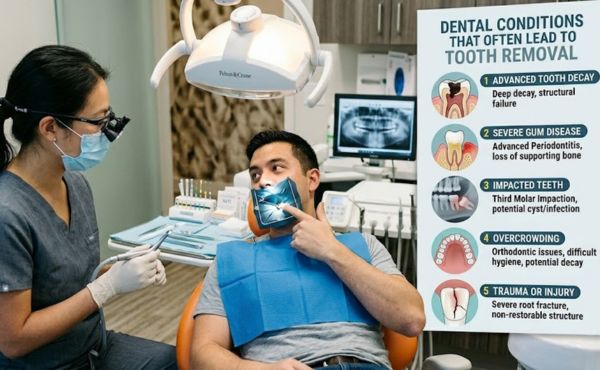
Dental Conditions That Often Lead to Tooth Removal
A dentist will assess each condition individually and advise extraction only if necessary. These are some common dental conditions where a dentist may choose to extract:
Advanced Tooth Decay
When decay has destroyed the majority of the tooth structure, it is very difficult to restore. It may be necessary to extract the tooth to avoid the infection from spreading.
Severe Gum Disease
Periodontitis results in loss of supporting alveolar bone to the teeth. When bone loss becomes extensive, the teeth may lose stability.
Impacted Teeth
Wisdom teeth may not erupt normally. Impacted teeth may cause pain, swelling, and infection.
Overcrowding
In certain orthodontic procedures, tooth extraction may be necessary to create space for tooth alignment.
Trauma or Injury
A sports or everyday accident may cause a tooth to break, which cannot be restored.
Dentists typically explore other treatments first, such as restorative procedures or periodontal care, before recommending removal.
What Happens During a Tooth Extraction
Familiarity with the procedure can help to soothe those who are anxious. Tooth extraction is a very common procedure and normally takes a relatively short time to perform.
Typical steps include:
Evaluation and Imaging
Digital x-rays conducted by the dentist show the tooth and the surrounding bone.
Local Anesthesia
The patient is given a local anesthetic to numb the tooth area.
Tooth Removal
The dentist carefully loosens each tooth to break its seal before extracting it.
Cleaning the Area
The socket is cleansed to prevent infection.
Healing Guidance
Instructions are given to the patient to promote appropriate healing and tooth pain treatment.
In most cases, patients can return to their daily routine within a couple of days. Healing occurs in different time spans, depending on the condition and extent of the procedure.
Benefits Of Early Detection In Dentistry
Early management can help avoid most tooth extractions in Brookline, MA. Regular visits to the dentist help identify problems at their earliest stage.
Preventive care may include:
- Routine dental exams
- Professional cleanings
- Early treatment of cavities
- Monitoring of gums and periodontal disease
- Evaluation for orthodontic problems
A dentist can suggest treatments such as fillings, root canal therapy, or a crown to help prevent a tooth from failing. Early identification of a dental problem helps prevent future problems, such as tooth extraction.
Conclusion: Ignoring Dental Problems Can Make Things Worse
Pain or swelling in the mouth is unlikely to go away without professional intervention. The symptoms indicate that something more serious may be occurring, such as infection, extensive decay, or gum disease. When left untreated, the issue can spread, affecting the neighboring teeth and bone structure.
Knowing the circumstances under which an tooth extraction in Brookline, MA may be required will help you seek treatment early. A dentist can analyze the causes, treatment options, and appropriate actions to maintain oral health.
Contact Us Today for Help with Tooth Problems
If you are experiencing persistent pain, inflammation, or signs of an infection, you should contact a dentist for a professional examination. Our experienced and caring dental team at Beacon Dental Center provides attentive evaluations, treatment for infected teeth, and management of tooth pain to help maintain long-term oral health.
Schedule an appointment to see if extraction or another treatment option is right for you.
FAQs
- How do dentists decide whether a tooth should be extracted?
Dentists evaluate several factors, including infection, structural damage, bone support, and the possibility of restoring the tooth. If treatments such as fillings or root canal therapy cannot repair the tooth, removal may be recommended to prevent further complications.
- Is tooth extraction always the last option?
Yes. Dentists usually attempt treatments such as crowns, root canals, or gum therapy first. Extraction is typically considered only when the tooth cannot be saved or when keeping it may affect surrounding teeth and tissues.
- How long does it take to recover from a tooth extraction?
Initial healing usually takes a few days, while full healing of the gum tissue may take several weeks. Following post-procedure care instructions helps reduce discomfort and supports proper recovery.
- Can infected teeth always be treated without extraction?
In many cases, infections can be treated through root canal therapy or antibiotics prescribed by a dentist. However, severe infections that damage the tooth structure or surrounding bone may require removal
Related Articles
When Is a Tooth Extraction Truly Necessary? Signs Brookline Patients Shouldn’t Ignore
Am I Ready for Dental Implants? What Your Dentist Actually Checks

5 Questions About Dental Bridges Patients Always Ask Us First

Keep Your Whitening Results Lasting: Our Maintenance Guide

Invisalign at 40, 50, 60: Why It’s Never Too Late for Straight Teeth
5 Dental Implant Myths That Are Keeping You From Smiling
Denture Candidacy: Your Complete Timeline From Extraction to Wearing

Lost Your Crown? Here’s What to Do Before Your Emergency Visit

Lost Your Crown or Filling? Here’s What to Do Right Now